



Every year, thousands of Ethiopians head abroad in search of better economic opportunities. But behind the promise of a brighter future lies a dangerous reality. Returnees and migration experts are issuing an urgent warning: thousands are falling victim to the false promises of illegal brokers, leading to severe human rights abuses and even tragic loss of life.
Human traffickers deceptively market illegal migration as a “fast track” that gets you a job in just a few days. In reality, experts warn, this “speedy route” is a dangerous trap that leaves workers completely unprotected the moment they arrive at their destination.

The “Fast Food” Illusion of Human Trafficking
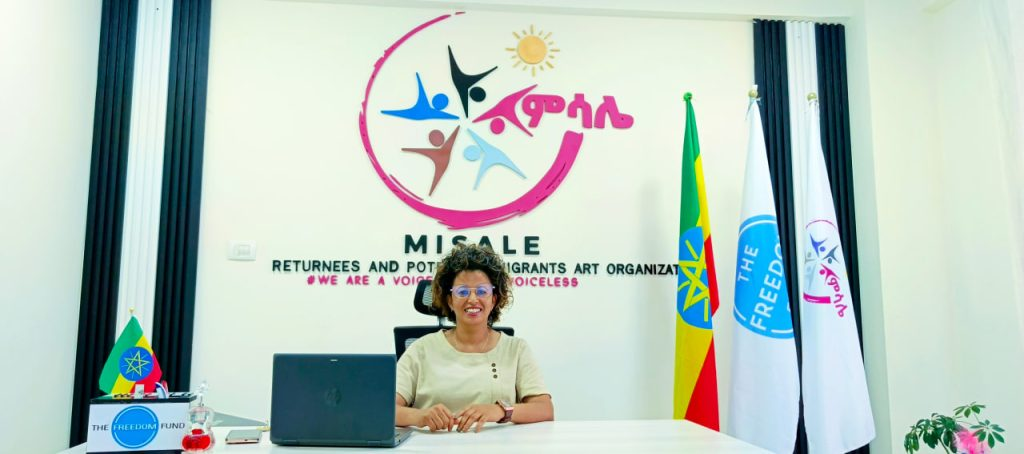
Hiwot Dagem, founder and manager of the Returns and Potential Migrants Art Organization, compares the tactics of illegal brokers to fast food.
“Fast food might satisfy your hunger for a brief moment, but over time, it ruins your health,” Hiwot explains. “Similarly, brokers slash the government’s mandatory 21-day pre-departure training down to just seven days. They ship people out with zero preparation, which is the root cause of the severe confusion, distress, and abuse these workers face upon arrival.”
For Dagem Yohannes (name changed), a young man who once fell for a broker’s swift promises, the reality hit hard. He used to think the legal, government-regulated route—with its medical checkups, fingerprinting, and training phases—was just an exhausting bureaucratic delay.
“But the truth is, even illegal brokers take three to four months just to secure passports and medical checks,” Dagem admits. “The so-called ‘fast track’ is nothing but a blind gamble driven by a lack of awareness.”
Today, Dagem’s perspective has completely shifted. He now recognizes that while the legal path requires patience, it is the only one that verifies employment contracts, secures fair wages, and explicitly identifies accredited employers. Ultimately, he says, the legal route acts as a shield against tragedy.
Ten Years of Hardship: A Returnee’s Witness
Fatuma Mohammed (name changed) spent ten painful years navigating the volatile world of undocumented migration. She warns that taking illicit routes does nothing but waste a person’s youth and golden years without offering an ounce of security.
According to Fatuma, undocumented migrants are often shuffled between multiple employers, facing continuous abuse. Shockingly, even after returning home, many fall back into the cyclical addiction of illegal migration because they feel they have no other choice. She also courageously points out that “dark networks” of brokers even manage to compromise some elements within embassies to exploit vulnerable citizens.
In sharp contrast, Fatuma emphasizes that under a government-monitored system, employers are legally bound by signed contracts. This accountability deters employers from committing abuses, knowing they face legal repercussions.
Moving Services from the Capital to Local Communities
To bridge historical gaps and clear up information bottlenecks, the Ethiopian government is taking drastic steps to make legal migration easier. Tekle Tesfu, Head of the Agency Licensing Desk at the Ministry of Labor and Skills, revealed that services have now been decentralized down to the local district (Woreda) and sub-city levels.
“Previously, citizens living in regional states were forced to travel all the way to Addis Ababa just to initiate their migration paperwork,” Tekle explained. “Now, they can begin registration right in their local areas using newly shattered One-Stop Centers.”
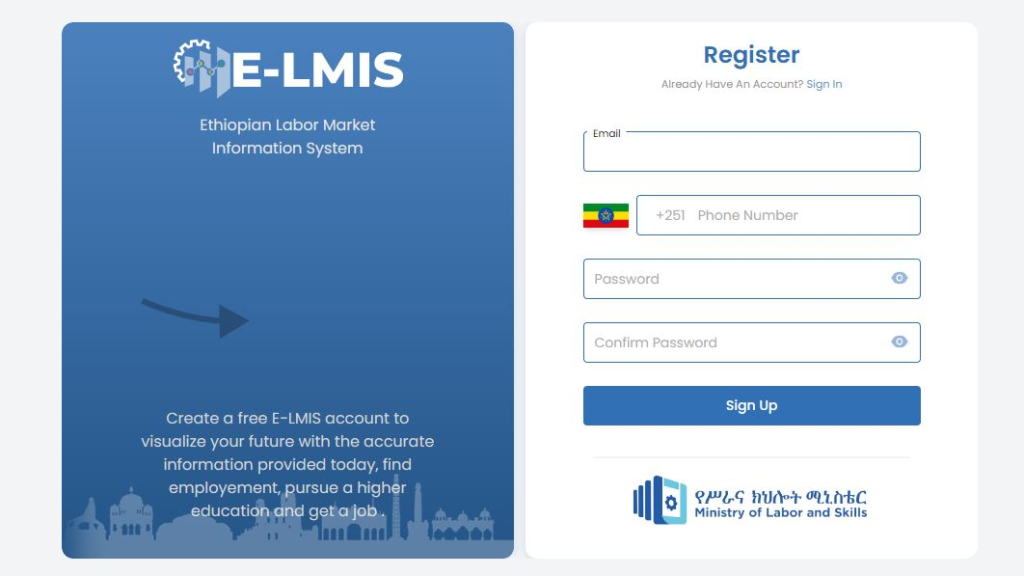
A cornerstone of this modernization is the Electronic Labour Market Information System (eLMIS). This digital platform allows citizens to submit biometric data and systematically review verified job opportunities in countries that have signed official bilateral labor agreements with Ethiopia.
Knowing Your Rights: The Legal Framework and Digital Tools
Under the Ethiopian Foreign Employment Proclamation No. 1389/2017, traveling abroad for work is recognized as a constitutional right. However, migration experts stress that this right must be exercised safely. Before departing, citizens need to understand the culture, lifestyle, weather conditions, work ethics, and salary standards of their host countries.
Legally contracted workers enjoy comprehensive protections covering everything from basic food provisions to wage enforcement. To monitor their well-being and log grievances, workers are urged to utilize the digital eLMIS platform, which tracks the entire overseas employment lifecycle starting from day one of training.
Additionally, the Ministry highlighted a new mobile application called “Lemengede” (On My Way). Easily accessible within the widely used telebirr SuperApp ecosystem, the app allows workers to use integrated mobile systems to monitor their safety and report abuses directly to authorities on the go.

Ultimately, media and migration experts strongly advise that practicing patience, demanding verifiable information, and exploring local job opportunities remain the only sustainable alternatives to escape the exploitative traps of illegal brokers.
📞 Need Help or Information? To learn more about legal employment procedures, report illegal brokerage activities, or flag instances of harassment, citizens can contact the Ministry of Labor and Skills directly via their toll-free helpline at 8484.
Click here to listen to the audio summary of this report.
By Getahun Asnake, Social Media manager, Menahria Radio 99.1









ምላሽ ይስጡ